Tuesday, July 29, 2025

Reflection on 32 years of teaching/coaching at Hillcrest/IMS

I was asked to share my thoughts on leaving my teaching position after 32 years in the classroom. An edited version appeared in a school publication. This is the unedited version of what I shared.


First I want to thank all of you, especially those of you who wrote appreciation notes, sent a card, or have said something like, “we should behave, it’s his last month here.” One of the appreciation notes said   “I hope you had a blast working here. ”  I have. 


Thread 1 Yesterday I asked my small group what they would like to hear. The only serious response was, “do you have advice for students as we get ready to head out into the world.”  If you listen carefully you may hear some advice. 


Thread 2. A few years ago Dwight had the teachers and staff do an exercise in one of our in-service meetings called the colors exercise. We answered a bunch of questions, drew circles, did some math and used the chart to see if we were “orange, blue, green or gold.” If you wonder, I was green (appears more comfortable with topics not related to feelings…”  followed closely by orange (welcomes diversions, enjoys the unexpected) . This prompted a discussion with my kids and their partners where they decided I was a quiet version of enneagram type 7   


Enneagram type 7  Enneagram Type 7, often called the Enthusiast. They are optimistic, spontaneous, and versatile, but can also be scattered, undisciplined, and prone to impulsive behavior. At their best, they focus their energy on worthwhile goals, bringing joy and appreciation to their lives. At their worst they often avoid dealing with emotions and feelings. 


To me this sounds like a great description of someone trying to teach social studies in a small high school. You are optimistic as you believe you can get teenagers interested in history, versatile because you need to teach three -five different subjects in a semester. The words spontaneous and versatile may just be positive versions of “scattered, undisciplined, and prone to impulsive behavior.” Also, my wife and others do tell me that I don’t do well with feelings and emotions, so I’m hoping I distract myself enough that I don’t get emotional during this talk. 


Thread 3: Monday, Erin referred to verses in Matthew and the idea of not worrying about what the future holds as you seek to find God’s calling for you. It resonated with me as I felt much the same when I was a senior, and in some ways it's similar to how I’m feeling now.  


Matthew 6:  25-34  19-21. 


It was sort of a necessary attitude to IMS teachers to have because our salaries weren’t all that great, especially in my early years. 


Over the years I’ve met people who have a five and ten year plan for their lives and periodically reevaluate those plans and their progress. That is not me. 


When Erin mentioned being called it reminded me of how I ended up at IMS. I’ve always been reluctant to say God called me to teach here, because I could imagine about half of you sitting there saying, “yeah, right.” 


Story of how i came to teach at IMS/Hillcrest

I dropped out of the education program at Eastern Mennonite because I didn’t enjoy the education classes. Instead I took all the history courses, plus economics, sociology, political science and a few others. This was actually helpful later when I got my Iowa Social Studies teaching endorsements.

My wife and I spent the summer after my junior year in the Germantown neighborhood of Philadelphia working for the oldest Mennonite congregation in the country and a historical agency that owned the buildings. A year later, after graduating they hired me as their director. After ten years in that position, we moved back to Iowa, mostly because of my wife’s health. I found work as a carpenter and developed a large collection of rejection letters as I looked for work. 

I went to commencement one year because I knew the speaker who was from New York City. Dwight said something to me afterwards, asking if I had ever thought about teaching because there had been a lot of turnover in the social studies position. Soon after I ran into Merv Birky, the pastor at West Union and a former teacher, who said maybe I should think about getting my teaching certificate, Firman Gingerich, a family friend and pastor at Iowa City Mennonite echoed that thought. I can be kind of dense sometimes but it felt like piling on when Dan Johnston, the pastor where we were going to church preached a sermon about Jonah and people who avoid their call. So one day, I took time off from work.  I called the University of Iowa Education department and was told I was crazy. Iowa Wesleyan didn’t answer the phone so I tried William Penn in Oskaloosa. They asked if I could come over so I did and by that afternoon I was registered for the education classes I needed. A year and a half later, in the fall of 1993 I started teaching, technically without doing my student teaching, something I finished for them in the spring. In other words it worked out 


I joined a group of experienced teachers who had been at the school for a while. I learned from them, and I also learned it didn’t work when I tried to teach the same ways they did. I had to develop my own style. Over the years I’ve been reminded that institutions live on, despite the faculty and staff who come and go. I’m leaving after 32 years but the school will continue and in a few years new students won’t know who I was. Marcus’s room will become Christopher’s room 


To go back a step, When I was looking for work in the late 1980’s early 1990’s a friend had been trained to lead people through a book titled “What color is your parachute?” One of the things I remember from the book is the idea that we already know 95% of what God is calling us to do. To love your neighbor as yourself, to think of others as better than yourself, to live in humility, don’t grumble and argue. In short as Christians we know how we are called to live. Choosing a specific job or career is an option and luxury most of the world has never had. 


In my case teaching at a small school feels like it has suited my temperament, my skills and my interests along with my foibles and what one former student called  “my neurodivergency.” Teaching has given me, or allowed me the 


Opportunity to try and do different things 

  • Assistant baseball coach twice” 

  • Twice I helped with the instrumental program for a couple of weeks. The last time I tried to help Jeremiah learn to play a trumpet. 

  • Somewhere between 15-20 class trips

  • Interterm or SALT groups that I took to Des Moines, Kansas City, Philadelphia, Jackson, Mississippi, and several times to Markham, a poor suburb south of Chicago. This last time I helped plan the spirituality of soccer group and along with soccer learned about drones, and AI, things that didn’t exist 32 years ago. 

  • Being in random plays or skits

  • Enjoying the times I got to sub for the art teacher but dreading the times I subbed in a math class. 

  • Friday night lights in the fall along with Capture the flag games 

  • Being part of a group asked to provide some entertainment for Junior Senior Banquet after the meal and before other activities started. The mens quartet sang a 50’s doo-wop song and we brought the house down with our rendition of the Backstreet Boys “I want it that way”

  • The annual events such as frying fritters, shredding apples, helping with the chili supper. 

  • Countless hours of discussion about dress codes including length or width of sleeves, length of shorts, 

  • Countless hours of discussions about phones and computer usage 


  • The chance to travel to China for a month with all expenses paid.

  • Two trips to Costa Rica with Spanish classes

  • A month in Poland with five students.

  • A month in western North Carolina where I was paid to learn about the Eastern Band of the Cherokee

  • A trip to the West Bank and Israel. 


Soccer brings more memories

  • My first year where I learned on the fly.

  • Going to the state championship match and losing in penalty kicks as it was snowing

  • Returning to state the next year, winning the first game in overtime on a Marshall Swartzendruber goal, then winning easily in the championship game over Fort Madison

  • Years where we struggled record wise but in terms of improvement and maturity doing well

  • Going to state in 2018 and 2019

  • Sleeping on gym floors and weekend trips to Des Moines, 


It’s easy to be nostalgic about events of the past 32 years. When I was taking education classes 33 years ago, they still taught us how to thread a movie projector, and talked about how VCR’s  & VHS tapes might change the classroom. When I started,  my room was the only one with a television which received any channels and IMS opened its first computer lab but there was no internet. For a short time all the teachers shared the same email address. 


The big scandal was Bill Clinton’s relationship with Monica Lewinsky and many wondered how we could let such an immoral man be President. I was sitting in a fastfood restaurant with my Interterm group when we heard the news about the bombing of the federal building in Oklahoma. It’s easy to remember all the feelings from the morning of 9-11, 2001 and the turmoil it brought as a tidal wave of patriotism and nationalism washed over the area. 


There were unpleasant and uncomfortable moments;

  • Discussions in the principal's office about something I had said or done in class or a lesson on a subject someone didn’t appreciate.

  • Learning on a day that we started late because of snow, that two students had died and one injured in a car wreck

  • A mother screaming at me during parent-teacher conferences

  • Getting a call one Friday night asking if I could come to the school since a student had fallen and was being rushed to the hospital. Theresa later died.  

  • Having former students die of cancer, accidents or suicide. And as I told my soccer guys, please, if you need to talk or check in with someone, I’m sure any of the adults in the room would be happy to talk or text with you.  I’m always happy when former students check in, or even more so when they come back and join the school community. It’s good to work with Nate, Corben, Ledru, Laurie and Marshall 


I learned to teach via zoom during Covid. Teachers went from watching out for band t-shirts to looking for cell phones.  


To hopefully bring the threads together and to answer my small group's request - Take care of the basics, read, pray, do your homework, help your parents around the house, learn how to talk to others even if you are shy and quiet. 

Learn to know yourself, learn to feel comfortable in your own skin.

Do the things you enjoy doing, be curious, get your head out of a screen and learn new things. 

Live some place other than Iowa for at least awhile. The ten years I spent in Philadelphia were life changing. 


Just like I felt called to teach here, I sensed it was time to move on, or said another way the call to leave this year. Back in the Fall I told Dwight he should start looking for a replacement for me. I don’t know what is next but hope that I continue to fulfill God’s purpose for my life. 


I do hope to spend more time with my granddaughters in Virginia, and there are projects I hope to work on but beyond that I don’t have definite plans


The uncertainty I face and maybe you seniors face, is reflected in this prayer of Thomas Merton which has spoken to me over the years.   


My Lord God,

I have no idea where I am going.

I do not see the road ahead of me.

I cannot know for certain where it will end.

nor do I really know myself,

and the fact that I think I am following your will

does not mean that I am actually doing so.

But I believe that the desire to please you

does in fact please you.

And I hope I have that desire in all that I am doing.

I hope that I will never do anything apart from that desire.

And I know that if I do this you will lead me by the right road,

though I may know nothing about it.

Therefore will I trust you always though

I may seem to be lost and in the shadow of death.

I will not fear, for you are ever with me,

and you will never leave me to face my perils alone.


Being here for the last 32 years has been a blast. 


Sunday, April 19, 2020

A letter to my soccer team after hearing the season was canceled because of the corona virus.


In case you haven't heard, today Governor Reynolds announced schools would not return to their physical classrooms this school year. She also announced that the high school spring sports season is canceled. You can read more from the IAHSAA at this link IAHSAA.

One of the things which went through my mind after hearing her announcement was this verse from Ecclesiastes 3; For everything there is a season, and a time for every matter under heaven. You can read Ecclesiastes 3 at the link. 

Ecclesiastes isn't a book of the Bible we often read from but in times like this I find it helpful. It goes on to say there "is a time to be born, and a time to die." 
This season never really had the opportunity to be born. We never had a first practice, first scrimmage, or first game. To be perfectly honest I wasn't sure if some of you receiving this email would even be at the first practice, or if I would have to do some gentle prodding and maybe even begging to get you to be part of the team.

Ecclesiastes goes on to say, there is a time to weep, and a time to laugh, a time to mourn, and a time to dance.  Like you, I was looking forward to the season. One of the things I enjoy every year is watching a group of young men come together and develop as a team. I enjoy watching you "laugh" at practice. I enjoy watching you "dance" with the ball and as you interact with each other in practice, games, on the bus and at McDonald's. I was looking forward to seeing how much some of you improved and to see what you looked like in the new Hillcrest Ravens uniforms. 

Instead of laughing and dancing, it is a time of sadness. It is a time to weep and mourn for what might have been. Who would have scored the first goal? How many win's might we have had, how many games might have gone to overtime, how many games might have been played in the rain (snow) how many saves, assists, and goals are all left to our imagination. 

At the close of the chapter the writer says "So I saw that there is nothing better than that all should enjoy their work,"   This maybe isn't the most hopeful ending, (which is one of the reasons people don't often read Ecclesiastes) but I do find comfort in those words. I do hope you all find meaningful and enjoyable work, but in the meantime I like to think that all of you would have found enjoyment in this season regardless of the number of wins and losses, or your individual stats. What most guys remember after twenty or so years is not the record their team had, or the number of goals, tackles, and yellow cards. What most remember is the relationships built throughout the season with their teammates. And that is what I will miss most about this "season."

If some of you would find it helpful to meet via zoom sometime to talk, I would be happy to set up a time. 

Blessings to you all.


Monday, June 10, 2019

Tim Ryan visits Washington, Iowa

When you  don't have much of a social life, its a Saturday night and you live in Iowa, you look for a presidential candidate to talk with.

Saturday night I drove to Washington to see Rep. Tim Ryan from Northeast Ohio who is running for President. We met at the Cafe Dodici shop next to the restaurant. Apparently the organizers were not expecting a large crowd. I arrived about five to ten minutes before Ryan was scheduled to be there and was invited to have a seat at a table with a few chairs scattered around.

Altogether there were twelve people present. Two people volunteering or working for Ryan, a reporter from KCII and a reporter from the "The News" formerly known as the Kalona News. They purchased the Wellman Advance, the Riverside Current and the Lone Tree Reporter to create their own local newspaper conglomerate. Many people in Wellman still refuse to subscribe.

Ryan showed up about five minutes later than scheduled. After a quick bathroom break he introduced himself to all of us and asked our names and anything else we wanted to share. He shared a bit about his family and his home district based in Youngstown, OH. The focus was primarily on the economy and the effect Trump's policies have had on places like Youngstown. The loss of manufacturing jobs and industrial base continue to have a negative impact on his constituency, many of who voted for Trump, but also for Ryan. And this gets to the reason why Ryan is running. He repeated several times that in a district that voted for Trump, he won re-election with 64-65% of the vote. Thus he can appeal to those who perhaps voted for Obama, at least the first time, but then voted for Trump.
While this may be a valid observation it seems to me that Obama won primarily by expanding the voter base. He got a lot of people to participate in the process and to vote who hadn't done so before. In Wellman, the first caucus for Obama was dominated by young people and others who had never caucused before.

Ryan went around the table giving each of us a chance to ask a question or to talk a bit about our concerns. He seemed a bit tired, maybe just subdued, but he seemed to listen and respond like it was the first time he had heard the concern. Issues raised included, beating Trump, the environment, women's rights and gender equality, large hog confinement buildings and their impact on the local areas, dealing with the urban - rural divide, mental health issues and so forth. The one point where he seemed energized was when the issue of student anxiety and stress came up after he remembered I said I was a teacher. He shared about being invited to speak to two wealthy school districts near D.C. where he was asked to speak about mindfulness and well-being. He said he's written a book about the subject so I should look it up. Anyway, he asked what their concerns were and the districts shared about the number of suicides and other mental health issues they were facing, largely because of the stress high students face.

Ryan seems like a nice, capable person. He's got a long ways to go to become a viable candidate, though as he said, there is still a lot of time.

Saturday, April 02, 2016

Joseph of Arimathea and Mennonites

50 Now there was a good and righteous man named Joseph, who, though a member of the council, 51 had not agreed to their plan and action. He came from the Jewish town of Arimathea, and he was waiting expectantly for the kingdom of God. 52 This man went to Pilate and asked for the body of Jesus. 53 Then he took it down, wrapped it in a linen cloth, and laid it in a rock-hewn tomb where no one had ever been laid. Luke 23 NRSV

Last week when I was doing the Bible readings for Easter week the verse or two which "jumped out" was the reference to Joseph of Arimathea and the comment that "though a member of the council he had not agreed to their plan and action." Was Joseph of Arimathea present in the activities described in Luke 22 when Jesus appears before the whole council? If he was and didn't agree, why didn't he speak up? I imagine it was a combination of fear, pragmatism, and of not knowing what else to do

I suppose Joseph of Arimathea is a good model for Mennonites, especially those of us from German-Swiss and Dutch-Russian background. We find ourselves in positions of privilege and power but when faced with injustice or what seems to be a tough decision we keep our voices quiet, our heads down and go along with the majority. We certainly don't stick out our necks. But when disaster happens and there is a mess to clean, we are there, more than willing to pick up the pieces, put things back together, and maybe even get our names in the paper.

Saturday, March 12, 2016

"InSideOut Coaching: How Sports Can Transform Lives"


Found a copy of this book after it was recommended at a coaching clinic I attended. This book would pair well with Parker Palmer's book, The Courage to Teach. Many of the ideas seem like common sense, yet in the world of athletics, common sense is often missing. First, Ehrmann writes about the importance of knowing oneself and being able to tell one's own story. Doing this background work helps to understand why you are coaching. Is it to help young people learn a sport, learn some skills and teamwork, and have fun, or is it to boost your own ego, relive your childhood and maybe catch a few of those "glory days."
Ehrmann spends a good bit of time describing and criticizing "transactional" coaches who coach for reasons other than the good of the athletes. Instead, Erhmann encourages what he calls "transformational" coaching. The basic premise is that participation in athletics can be an important key to helping young people mature, develop character, and moral values. Erhmann provides examples from his experience as an high school, college and professional athlete, along with examples of both transactional and transformational coaches in his life.
Ehrmann's approach resonates with me and I like to think I have done some of what he recommends during my coaching career. This book is an excellent reminder of the power coaches have in the lives of young people. It is a call to coach in a way which brings out the best in youth and to focus on more than the won-loss record. I would recommend this book to all, especially those just starting their coaching careers.


View all my reviews

Sunday, December 27, 2015

"The Half Has Never Been Told" Edward Baptist


 Every now and then a student or parent tells me, “Slavery wasn’t that bad,” or the time honored classic, “the Civil War was about State’s rights, not slavery.” Edward Baptist provides an in-depth response to such arguments making it clear the vast majority of the wealth of the United States was built on the exploited labor of slaves who toiled on land stolen from Native Americans. And by the way, slavery and its role in the US had everything to do with the Civil War.
Baptist uses the extensive records kept by slave labor camps as owners sought ways to maximize the production of cotton and with it their profits. Southern slave owners would have made the folks at Goldman Sachs and Lehman Brothers proud as they figured out ways to monetize the people they owned. Mortgaging slaves allowed them to sell debts as investments, as investors, many of them living in the north hoped to get in on the profits being produced by slave labor. They even figured out how to get southern governments to back their schemes making taxpayers responsible if people defaulted.
Baptist supplements these records with published accounts of runaway slaves and the oral history interviews with people who grew up as slaves.Through it all, Baptist describes the inherent cruelty in slavery as owners pushed and beat their slaves to perform more efficiently. Baptist describes this as the “whipping machine” and documents the use of torture to drive profits, to keep the slaves “in their place,” or to just prove they were in charge.
One of the important tasks Baptist undertakes is to explain how slavery and the desire of slave owners to expand the system underlay almost every important event in the early years of the United States. This includes arguments over the Second Bank of the United States, removal of the Cherokee, Chickasaw, and Creek, conflicts with Mexico over Texas, the Mexican-American war, the transcontinental railroad and more. This is important material to use to supplement the traditional interpretations of most high school American History textbooks.
I read this book on a tablet which I found frustrating as this is one of those books where it is important to read the end notes. So sometime, I plan to buy the book in its traditional format.

Friday, November 13, 2015

I was asked to write this for an insert into the program for the school musical.

The Cotton Patch Gospels and Clarence Jordan

Sometime back in the mid-1970’s I first read Clarence Jordan’s translation of the book of Matthew. Jesus was born in Gainesville, traveled and preached through Georgia and Alabama before being lynched in Atlanta. For someone whose only Bible was a red-letter King James Version, this was revolutionary. Instead of “verily’s” and “thus sayeth’s,” this version had Jesus saying, “don’t be like the religious phonies…,” criticizing church leaders and teachers instead of the Pharisees and Scribes, all the while drawling Southern “ya’lls and “aint’s.”

Clarence Jordan’s Cotton Patch Versions of the New Testament opened new perspectives when published in late 1960’s and though they caused controversy in some circles, for others they were a refreshing way to make the scriptures relevant to troubled times. In the forward to his translation of Luke, Jordan wrote that he hoped to “strip away the fancy language, the artificial piety, and the barriers of time and distance… and put Jesus and his people in the midst of our modern world.” Jordan emphasized the humanity of Jesus, something he believed had been lost in much of the church. “Jesus has been so zealously worshiped,” Jordan said, “his halo so brightly illumined, and his cross so beautifully polished that in the minds of many he no longer exists as a man.” Jordan wanted to counter this tamed down Christ by focusing on a Jesus who ate with “tax revenuers and women with questionable morals.” Jordan challenged people with the simple teachings of Jesus—to treat our neighbor as ourselves, to care for the poor, to bring sight to the blind and liberty to the enslaved.

Clarence Jordan sought to make this radical Jesus relevant to our time in practical ways. The Gospel message was for now, not somewhere off in eternity. To do this Jordan, his wife and another couple moved to rural Georgia in 1942. The goal was to create a community where people of different skin colors could live together as brothers and sisters in Christ. They held interracial Bible Studies—an act which led to their excommunication from the local Southern Baptist congregation they attended.

Efforts to help their neighbors in practical ways resulted in the formation of an interracial faith community, Koinonia Farms.  Because of their views on civil rights, local businesses boycotted Koinonia;  the KKK and others committed numerous acts of vandalism including shootings and bombings.  The violence aimed at Koinonia is reflected in the musical with lines from Matthew:
“Herod had Mabry see to it that on Sunday morning a bomb got tossed into the
nursery of the church where Jesus was supposed to be. Fortunately, Joe had taken
Jesus to Mexico so the plan failed to kill him, But, the explosion did murder fourteen
innocent infants and toddlers. It was a horrible sight that morning.”
Any American who read this thought not just of Jesus, but the four Black girls killed on their way to Sunday School in Birmingham.

In the face of  violence, some Koinonia families moved, but Jordan and others stayed. Through it all they maintained a commitment to nonviolence along with a sense of humor.  When they could not sell their pecans and other products locally because of the boycott, Koinonia began a mail-order business with the slogan, “Help us ship the nuts out of Georgia.”

Like many organizations Koinonia had its ups and downs. Clarence Jordan died in 1969 at the age of 57 but Koinonia and the Cotton Patch Version continue to inspire people to faith and action.

Shortly before Jordan’s death a young businessman, Millard Fuller came to Koinonia looking for a sense of purpose in  life. From that meeting an idea of how to provide housing grew. Eventually Fuller created Habitat for Humanity, an organization which has built thousands of houses around the world. Later, other families formed Jubilee Partners a group which provides numerous services to immigrants and others on the margins of society.

This musical, the Cotton Patch Gospel is one attempt to keep the memory of Jordan, his wife Florence and others from Koinonia alive. It is a legacy worth remembering as we recall the cloud of witnesses who have gone on before.

Marcus Miller

Saturday, October 10, 2015

Jacob Hochstetler and Gun Control

Jacob Hochstetler and Guns.

Another week, another school shooting. Last week it was at a community college in Oregon, today at colleges in Arizona and Texas. What followed is predictable. The President condemns the shootings and calls for action on gun control. Candidates hoping to replace the President respond arguing gun ownership is protected by the Second Amendment rights, that “gun’s don’t kill people, people kill people,” and if guns were banned only criminals would have guns. Gun free zones are said to make everyone unsafe while at least two candidates suggest  it might be time to arm teachers.

Comments on Twitter condemned the shootings and the NRA, while others, decried any gun control, lest an oppressive government somehow impose their will on its citizens. My “friends” on Facebook shared similar sentiments. Those who posted  about the shootings were equally split.  Appalled at the violence some posted stats showing the danger of guns. Those who like their guns posted images of their favorite guns, voiced their support for guns, and argued what we really need is a “change of heart,” or to “get back to God.” A week later the pro-gun memes continue though concerns about mental illness crept into the picture.  Statistical data is used to back arguments, but for the most part it seems, facts don’t matter.

What I find interesting in the midst of this are the stories people tell. Many of my high school students are descendants of Jacob Hochstetler, an Amish immigrant who settled in Berks County, PA in the 1730’s. Many of these same students like guns. I’m also a descendant and grew up hearing the story of Hochstetler's deadly encounter with a group of Indians. In 1757, during the French and Indian War, the family was attacked by several Indians. The story goes that the family took shelter in their home. The sons reached for their guns sure they could drive off the Indians but their father forced them to put the guns down because of his religious beliefs. Eventually, Hochstetler’s wife, daughter and one son were killed, while Jacob and two sons were taken hostage.

Today there is a genealogy/historical site on the internet devoted to tracking Hochstetler and his descendants. A couple of novels based on the incident were published in the last year, and I can always count on hearing the story again in my American History class.  In the stories I heard as a child, Hochstetler’s actions were characterized as driven by faith and his desire to follow the teachings of Jesus, even the hard ones about turning your cheek and not killing.

What if instead, Hochstetler had grabbed his gun, allowed his sons to fire theirs and driven off, or even killed the Indians? Would his multitude of descendants remember his story or anything about him? Would his resistance be remembered as faithful or would it be seen in a much different light. I am curious what meaning people, especially his descendants take from Hochstetler’s story. Was he faithful? Foolish? Naive? Why does his story continue to be told? What kind of example does he provide? In the midst of our violent society, could we, like Hochstetler, put down our guns?

mlmiller 10/9/2015

Monday, August 17, 2015

Campaign 2016

Finally made it to my first campaign event for the coming Presidential elections. I missed Rick Santorum's visit to Wellman as we were traveling, and because I had a decent paying job this summer I chose not to try and see Jeb Bush or Hillary Clinton in Washington and Iowa City.

The last few days I've been spending a fair amount of time at the University of Iowa hospital where my wife is recovering from surgery. The surgery went well but the auto-immune disorders have complicated the recovery. A former student texted saying that Bernie Sanders was going to be stopping in Iowa City, about the time I generally leave the hospital. So I found a closer place to park, but still walked about 8 blocks to get there. 

Amazingly enough, Sanders was on time and after a brief introduction by some local officials, Sanders spoke. It is easy to describe him as an economic populist. He hammered the issue of income inequality, stagnating wages, greedy corporations who move jobs overseas, campaign financing, college debt, and gender income disparity. Eventually he mentioned both climate change and racial issues, but it wasn't long before he tied both back to economics. The name of the little shopping center added an interesting touch.

The crowd responded well to what I imagine has become his standard stump speech. I would guess there were at least 250 people there to hear him. It was an interesting mix of young people, many of them volunteers, and older people, many with beards, longer hair, otherwise known as the granola crowd. Sanders did not take any questions and after shaking a few hands and signing some autographs he was hustled into the SUV. He spoke with passion and vigor, yet reminded me of a grandpa who has gotten worked up and a bit pissed off. I'm guessing his staff keeps a close eye on his schedule and diet to keep him rested and ready. 

One of the reasons I haven't gone to many of these is the candidates seem to have learned how to control their audiences a bit during the last eight years. For example, to see Jeb Bush in Washington you were supposed to register for a "free ticket" a few days ahead of his visit.  I don't know if they took the time to screen people who applied for tickets or not but if you have the information you might as well. It does guarantee you will get lots of mail, email, and worse, phone calls because the registration required all that information. If the candidate is going to take questions it would allow the staff to screen people so that some Iowan doesn't ask an "inappropriate" question. Tim Pawlenty probably wishes I hadn't showed up eight years ago, but that is what the Iowa caucus is supposed to be about. Helping candidates refine their message, seeing through the BS, in general weeding out weak candidates. Sanders crowd was big enough he could easily get away without taking questions, but for some of the others, especially those drawing small crowds, it is one chance they have.

The Cspan bus was there handing out some goodies and promoting their programming. This picture is at the back of the crowd where some of the volunteers were nabbing people on their way out for contact information.

This picture is from the top of the parking ramp looking at the U of Iowa Hospitals, where the wife is recovering. She was sleeping so it was time to head home.

Saturday, January 03, 2015

CIA Torture Box


When the Senate released the results of its investigation in the techniques used by the CIA on detainees, many of my students had a hard time visualizing the size of the box. They could understand the reference to the  "casket sized box" at least one detainee was kept in for over eleven days but the measurements, especially when reported in centimeters didn't register. I drew (as best I could) a picture on the board but that only helped a bit. Some students, especially the smaller ones made comments like, "that wouldn't be so bad." So over Christmas break I scrounged enough scrap wood from my shed to build one. The dimensions in the report were listed at 21" x 30" x 30." None of the reports specified if these were the inside or outside dimensions so I made them the inside dimensions. 


When I was putting it together it actually seemed a bit bigger than what I thought it might be. Still I can't imagine spending more than a minute or two in the box let alone the 29 hours Abu Zubaida spent in the box. This was after spending over 11 days in the casket sized box. If you want more details you can read them at: http://www.washingtonpost.com/blogs/worldviews/wp/2014/12/09/the-10-most-harrowing-excerpts-from-the-cia-interrogation-report/

Hopefully this helps students and maybe others visualize the harshness of the techniques used by people representing the U.S. government. A nation which claims to be the moral beacon of the world should be down on its knees begging forgiveness.


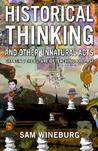
Historical Thinking and Other Unnatural Acts: Charting the Future of Teaching the Past by Sam Wineburg

Historical Thinking and Other Unnatural Acts: Charting the Future of Teaching the Past (Critical Perspectives on the Past)Historical Thinking and Other Unnatural Acts: Charting the Future of Teaching the Past by Sam Wineburg
My rating: 3 of 5 stars

I got a hold of this book primarily because of the title. It reminded me of a comment I read along the lines that any adult who willingly closes the door behind him as he enters a roomful of 16 year olds to teach them history has got to be nuts. I’ve been willingly closing the door for the last twenty years.
Read the first chapter, then skip to the last two chapters. If I had done this I would give the book four stars. Instead I read the whole thing. The chapters in between quickly reminded me why I avoided as many education courses as possible.
Wineburg asks important questions about the understanding of history, the teaching of history, and collective memory. Fourteen years after the publication of Wineburg’s book, the teaching of history remains controversial at best, deadly boring at its worst. So my advice, make it enjoyable, develop a thick skin, don’t worry too much about making people (students/parents) mad, (it is amazing the research students will do when they want to prove you wrong,) and hope you have a supportive principal.


View all my reviews

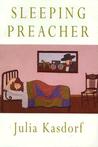
Sleeping Preacher by Julia Kasdorf

Sleeping Preacher Sleeping Preacher by Julia Kasdorf
My rating: 4 of 5 stars

Thought provoking poems which sparked memories of my own experience.
Having the only television in the extended family, considering what to wear when going to church with Beachy Amish relatives, (short sleeves are worldly and immodest even on a male, let alone one trying to grow sideburns.) Feeling part of, yet different, the transition from rural to urban, even the regular Sunday night menu. Maybe I like them because they reflect some of my own families experience. I imagine most folks from small rural towns who have ventured to larger places will find themes which resonate.


View all my reviews


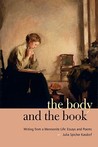
The Body and the Book: Writing from a Mennonite Life: Essays and Poems by Julia Spicher Kasdorf

The Body and the Book: Writing from a Mennonite Life: Essays and PoemsThe Body and the Book: Writing from a Mennonite Life: Essays and Poems by Julia Spicher Kasdorf
My rating: 5 of 5 stars

Reading this was a bit like I imagine a historical therapy session might be. Kasdorf’s essays reflect on the back stories of her poems, the creative process, her relationship to her family and community of origin, and that sometimes strange group of people called Mennonites. Kasdorf’s writings prompted lots of memories, thoughts, and reflections, responses I hope she would appreciate from her readers.
For someone like me, a Mennonite whose family moved every 4-5 years in and out Mennonite communities in Iowa,  it was easy to identify with being part of, yet different, of easily fitting in because of my name and lineage, yet always feeling I wasn’t quite normal. Being the only family in the “freindschaft” who had a television made us popular whenever the Hawkeyes games were aired, but not so much at other times. Living in Philadelphia and being part of the Germantown Mennonite group referred to briefly by Kasdorf, was life changing, yet now back in the Kalona area it is not something easily talked about. Kasdorf gives voice to these thoughts and feelings but like most writers I appreciate, she asks more questions than she answers.


View all my reviews

Saturday, December 20, 2014

Book reviews

Life After Murder: Five Men in Search of RedemptionLife After Murder: Five Men in Search of Redemption by Nancy Mullane

My rating: 3 of 5 stars


Mullane explores the California prison system by looking at the lives of five men, all convicted of murder. During the course of the time Mullane begins her project, the five men are paroled or released through actions of the judicial system. The book is one part, what happens to the men in prison, the second is, what happens once the men are released. Through these stories, Mullane also takes aim at California laws, which in an effort to get tough on crime basically added the words "to life" after every sentence when found guilty of a serious crime. A conviction for 2nd degree murder went from something like "15-30 years", to "15- to life." This change had implications for the parole board and political implications for the governors, none of whom wanted to release someone who would kill again.

This criticism of the judicial and penal system is the most important part of the book though at times it is downplayed. The other important criticism is Mullane's observation that the State of California pays approximately $50,000 per year to keep someone in prison. At the same time the State offers little to no monies to aid those who just were released from prison, in many cases dooming the freed man to almost certain failure.
Through these stories Mullane reminds us that American prisons have for the most part become places for punishment and retribution. They are places where rehabilitation takes place only through the efforts of the men in prison, and the dedicated volunteers who enter the prison on a regular basis.

I've been writing these reviews, figured I may as well link them to here.


View all my reviews

Friday, August 29, 2014

Haven't written for basically two years. Among the reasons, I was an Elder in my church when the co-pastor and his wife were killed in a traffic accident. With everything going on there wasn't much time to write, plus my mind was on other things, for example, last summer my son got married.

I am now serving on the Scofield Wellman Public Library board. Its been interesting though I have to admit I haven't done much besides go to the meetings. At the beginning of the summer we met with a consultant provided by the State of Iowa to do some long range planning. Part of the process was to identify a variety of community members who could provide feedback about services and programs they would like the library to provide. We were to come up with a mix of long term residents, people who have just moved to Wellman, old, young, men, women, professional, students, home-school families, some minority's (yes there are a few people of color in Wellman) business people and representatives from the churches and other agencies in town. The consultant met with these people in two meetings. They agreed on three broad ideas for what we should focus on for the next few years to keep the library relevant and useful to Wellman.

What I found intriguing was my experiences of seeing this process work in churches. The process was very similar with one huge exception. The church process focused on members and those who attended the church and what their ideas were. I dont' know for sure but I would guess some of the folks involved in the library process have never been in the Wellman Library. I wondered what would happen if Kalona Mennonite or any other church would identify a representative group of community members who aren't part of the church to ask them what role they would like the church to play in the community. Would they focus on new carpet, paint and different musical instruments? Would they suggest a bunch of new programs? Or would they see the church as largely irrelevant to the community and beyond hope? Maybe someday I can convince a church to try the process and see what happens. Just a thought.

Saturday, November 03, 2012

Campaign sign update

I got on the bike and rode around town counting signs since it was a pleasant afternoon, I needed the exercise and the weather was cooperative. If anyone cares, riding most of the streets of Wellman is about 8 miles, according to the little odometer I put on the bike.

The totals three days before the election were President Obama 19 and Mitt Romney 11. The surprising thing was the guys who had left their Ron Paul signs on display finally took them down. Neither replaced them with a sign for another candidate. When I started, Romney signs predominated and jumped to an early 10 to 4 lead. It seems a bit ironic to see Romney signs in front of a trailer house or the little shotgun house which could use a coat of paint. I'm sure Romney would feel right at home in either of them.

When I made it to the north side of town, I began to see more Obama signs with several scattered on 8th and 9th avenues and a couple on Highway 22. There weren't as many signs in the "nicer" parts of town - Circle Drive(1) and the new area behind the nursing home (0). Finishing my ride I went through the trailer park near our house where there were three Obama signs.

It will be interesting to see if the signs reflect the actual vote. Washington County as a whole usually votes Republican so the goal of the local Democrats is to try and get as close as possible. Four years ago McCain won the county by 77 votes which was a "win" for Democrats since registered Republicans outnumber registered Democrats by quite a bit more than 77 voters. The local election results will be close again this year.

Sunday, October 07, 2012

campaign signs

I took a bicycle tour of Wellman this afternoon after realizing I had seen two Ron Paul yard signs and no Mitt Romney signs on display in town. To confirm my observation and to get some exercise, I pulled on some warm cloths and jumped on the bike. The two Ron Paul signs were on a busy street and I see them nearly every day. When I made my way to the Daytonville neighborhood I found a Romney sign in the entrance to a lane. The second Romney sign was in the "little Italy" neighborhood behind the feed mill. Again it was in an area which doesn't get much traffic. I thought there was another Ron Paul sign still being displayed but I couldn't find it. Paul won the Wellman caucus and some of his supporters are irritated at how the Republican party treated him. From what I hear some of these folks plan to either sit out the election or to vote for Gary Johnson the Libertarian candidate.

As I made my way through the central part of Wellman I began to find the Obama signs. One was along the highway which runs through Wellman, two were on main streets and two were a little more out of the way.

All the signs were outnumbered by the "Home for sale" signs. There were at least 12 of these signs which I suppose means the economy is still slow since a couple of them have been on the market for several months.

The lack of signs may mean that folks aren't that interested in the election, at least not yet. Or perhaps it means folks have already made up their minds. One difference, at least for Democrats is that this year the campaign headquarters are asking for donations before handing over a sign. Four years ago, especially before the caucus, candidates were happy to hand over the signs so I ended up with several.

Friday, August 17, 2012

I was asked to share in chapel the other day on the topic, "How the Bible speaks to me?" They gave me approximately 5 minutes

I grew up hearing the stories of the Bible. David and Goliath, Samson, the Exodus, and my favorite as a kid, Daniel in the Lions Den along with Meschak, Shadrack and Abendigo. They were certainly more entertaining than the Dick and Jane books which were available to read.

One of the problems of growing up in a Christian home is that after awhile the stories become so familiar that it is easy to skip over them, read the first verse and then tune out, “because I’ve already read that story.” It was difficult to find fresh meaning and so it was tempting to skip reading the stories or the Bible all together.

In high school or college I heard a quote attributed to the theologian Karl Barth who was supposed to have said “you should read with the Bible in one hand and the newspaper in the other.”
http://libweb.ptsem.edu/collections/barth/faq/quotes.aspx?menu=296&subText=468

In a similar way Billy Graham, said July 2, 1962
“World events are moving very rapidly now. I pick up the Bible in one hand, and I pick up the newspaper in the other. And I read almost the same words in the newspaper as I read in the Bible." ― Billy Graham
http://www.goodreads.com/author/quotes/40328.Billy_Graham

For many years it has been easier for me to read the newspaper than it was the Bible. Somewhere along the way I have found that reading the news, understanding our culture and society can give new meaning to many of the stories in the Bible. Life experience also shapes this as now when I hear or read some stories I can't read them without thinking of person who explained something, a situation I was in and so forth.

An example of this is a story found in Mark 5, Luke 8:26 and in Matthew 8:26 though the Matthew version of the story has some significant differences.

This is the story where Jesus crosses the Galilee to the country of the Gerasenes. Here Jesus is confronted by a man who wore no clothes and lived in the tombs. He could break his chains when shackled, and when freed he spent his time running, howling and bruising himself. When Jesus confronts him, the demons speak and ask to be sent into a group of nearby pigs. Jesus grants the request and the pigs, filled with the demons rush over a cliff and into the sea where they drown.

Everytime I hear or read this story I picture an Egyptian Christian, Farid Wissa who preached a sermon based on this story when we were at Germantown Mennonite. Farid was a bit odd and I can still see him rocking back and forth, with part of his shirt tail sticking out through his zipper. In spite of this, Farid pointed out that the owners of the pigs, and likely the man filled with demons were not Jewish. I’m not sure why I hadn’t thought of that before but I hadn’t. So in addition to a story about pigs, demons and the power of Jesus, it became a story which shared God’s love for all peoples, not just the Jewish residents of Palestine.

More recently I happened to read Shane Claiborne’s book, “Jesus for President.” who pointed out some details of the story which, for me gives it more meaning. To summarize, the area Jesus traveled to was the location of ten cities called the Decapolis. The cities had been built on land conquered and occupied by the Roman military. Many of the residents of the Decapolis were current or former members of the Roman Legion. Can we assume that the man described as filled with Demons might have been a former Roman soldier? What does it mean when the demon says to Jesus, “my name is Legion?”

About the same time I read this, I ran across an article in Rolling Stone magazine which explored the lives of four young Americans who had returned to the Denver area after serving in the US army and marines in Iraq. The four suffered from PTSD’s and as a result they began to engage in behaviors which were destructive to themselves and to others. If I remember correctly one of the men profiled by Rolling Stone died in an accident and two were convicted of murder after going on a drug and alcohol induced rampage in their neighborhood. William Tecumsah Sherman, the Civil War general said, “War is hell.” Were these men filled with the demons of war? Could the Geresene man filled with demons have been a Roman soldier suffering from PTSD’s? The Roman wars of conquest could be brutal and often involved bloody hand to hand combat. Those of you who have Gladiator will have seen this. So, at least for me, the story from scripture and the story from Rolling Stone combined to give me more meaning to the Biblical story but also to events surrounding me today.

In the story, Jesus heals the man who then begins telling his friends about Jesus.
If we, the church, are to be the representatives of Jesus here on earth, are we offering healing to those who suffer from PTSD’s. Are we offering healing and hope to returning soldiers suffering from the traumas of war? Where do I fit in the story? Am I one of the townspeople who is scared by what the pigs did and so I ask Jesus to leave? or am I one of those who perhaps asks Jesus to stay? How do I respond today?

I’m sure there are other ways this story can be interpreted and there are other questions which can be asked. But in doing as Bart and Graham suggest, reading the Bible along with the news, helps me to understand and interpret current events, at the same time, it keeps the Scriptures, written 2000 years ago, relevant and worth reading.
ASking where I fit in the story makes it personally relevant, and this is how the Bible, along with the news speaks to me.

Sunday, June 24, 2012

An Iowa Cornfield


Since I call this "from the middle of a corn field" it seemed appropriate to include a picture of a cornfield. The corn is a bit behind schedule this year primarily because of a wet April which slowed planting. The month of June has been dry in our area which has also limited the growth of the corn.

Wednesday, June 13, 2012

catching up

It has been awhile. Since I last wrote, Romney and Obama have captured their party's nominations to run for president, school has ended, the soccer season came and went and summer is under way.

The main excuse is that I got busy. About the time of my last post, way back in January, I had surgery on my Achilles tendon and heel. There was a trip to the Mennonite Educators conference in suburban DC, where I hobbled around on crutches. That same weekend the co-pastor at my church and his wife were killed in a car wreck leaving behind four children between the ages of 13 and 20 or so. I'm on one of the leadership teams at church(they call it an Elder) so we had to scramble to figure out what to do next. We discovered there really isn't a good map for how to deal with such a tragedy so we have been muddling our way through with the help of our conference leadership and the advice of others. Since they worked with the youth we had to scramble to find people to fill their spots and to piece things together. On top of this we tried to make sure their family members, including the extended family, were being cared for.
Fortunately people have been cooperative and supportive. We now have some interim people in place which will allow us to take our time in figuring out what to do next.

Soccer season came and went. We finished 15-5 so overall it was a good season. The end was disappointing as we lost in the second round of state playoffs in overtime. A week after the season ended I was able to travel to Costa Rica with the Spanish class. I learned some Spanish and it was interesting to see the changes which had taken place in the last twelve years.

This week I am taking a class at Mid-Prairie titled "Learning for the 21st Century" It has been helpful for the most part. The first two days we were led by Brian Mull. He introduced us to ways to use Twitter, Diigo, Google Docs and its various apps, Jinga, Screenr, EasyPoll and a couple other tools I may have missed. Today, Angela Maier, led us in a session titled "Passion Driven Learning." She was quite passionate but half a day might have been enough. Instead we were blessed with her passion for the whole day. Tomorrow we have someone else leading our activities.